
PRIDE Blogs
Here at PRIDE Reading Program, our goal is to provide parents, tutors, and teachers with tips, resources, and positive encouragement!

10 Evidence-Based Multisensory Learning Techniques
Explore 10 evidence-based multisensory learning techniques for teaching reading and supporting students with dyslexia via an Orton-Gillingham approach.

How to Build Phonemic Awareness in Preschoolers
Discover how to build phonemic awareness in preschoolers with age-appropriate activities, milestones, and tips that prepare young children to read.

Reading Games for Struggling Readers: 10 Activities That Work
10 reading games for struggling readers that target phonics, fluency, and comprehension. Easy to set up at home or in the classroom.

Best Multisensory Reading Programs for Parents and Teachers
Compare the best multisensory reading programs for parents and teachers. Learn what makes each effective and how to choose the right one for your learner.

Orton Gillingham Resources for Parents and Tutors
Get the best orton gillingham resources for parents and tutors. Compare complete OG curricula and multisensory tools to find what fits your learner.

Best Reading Curriculum for Dyslexia: What Works
Get a parent’s guide to choosing the best reading curriculum for dyslexia. Learn what makes instruction effective and compare PRIDE’s fully scripted approach.

The Best Online Dyslexia Programs for Families at Home
Get a clear look at online dyslexia programs for home. Learn which Orton-Gillingham features matter, then explore PRIDE’s levels to find the right fit.

Preschool Phonics Activities to Build a Reading Foundation
Ready to explore preschool phonics activities that build early reading skills? Discover hands-on, multi-sensory play ideas you can try at home today.

Online Reading Programs and the Structured Literacy Choice
A child who freezes when asked to read a short sentence aloud needs structured help. When school instruction is not enough, parents often look for tools they can use at home. Effective online reading programs for struggling readers must use a structured literacy...

Reading Intervention Programs: A Parent’s Guide
When homework ends in tears over simple words, traditional classroom methods are often not enough. Many smart children struggle to connect letters to sounds, which stalls their progress and hurts their self-esteem. Understanding how to support your struggling reader...

How to Choose a Homeschool Reading Curriculum
Ready to find the right homeschool reading curriculum? Compare structured literacy programs and learn what to look for in a reading program for your child.

PRIDE vs All About Reading: Choosing the Right OG Program
Get a clear PRIDE vs All About Reading comparison for your homeschool. See how these two OG programs differ in structure, pricing, and all-in-one value.
Reading Intervention for Middle School: Structured Literacy for Older Students
Get the PRIDE Reading Program levels to find reading intervention for middle school. Learn how structured literacy helps older struggling readers build skills.
How to Teach Orton-Gillingham Spelling Rules: A Complete Guide
Browse PRIDE Reading Program’s Orton-Gillingham spelling rules guide for homeschool parents. Learn the FLOSS rule, K/CK,…
How to Choose a Homeschool Dyslexia Curriculum That Works
Get the essential criteria for choosing a homeschool dyslexia curriculum that works. Learn what to look for, red flags to avoid, and how PRIDE Reading…
Syllable Division Rules: A Simple Guide for Teachers
When students hit a long, unfamiliar word, they often freeze. They might guess, skip it, or shut down altogether. Syllable division rules give readers a strategy for breaking those big words into smaller, manageable parts so they can sound them out with confidence....

Reading Comprehension Strategies for Struggling Readers
When a child struggles with reading comprehension, every subject becomes harder. Science textbooks, math word problems, and even simple directions on a worksheet can feel like a foreign language. The good news is that reading comprehension strategies, when taught...
Reading Programs for Dyslexia: A Comprehensive Guide
If your child is struggling with reading, you’ve probably been told they just need to “try harder.” But for a child with dyslexia, effort isn’t the issue—the method of instruction is. The dyslexic brain processes language differently, which is why a standard...
Homophones Meaning: Definition and Examples
Nothing stalls a creative writing session faster than uncertainty. For a young writer, the fear of choosing the wrong word—like “ate” instead of “eight”—can be enough to make them put their pencil down. This is especially true for students who learn differently, as...

What Is the Orton-Gillingham Approach?
What Is the Orton-Gillingham Approach?The Orton-Gillingham approach is a structured, multisensory method for teaching reading, writing, and spelling that is especially effective for students with dyslexia. Developed by Dr. Samuel Orton and Anna Gillingham in the...

Evidence-Based Reading Instruction: What the Research Says
School leaders and educators hear the phrase "evidence-based" constantly. State mandates require it. Grant applications demand it. But what does the research actually say about how children learn to read, and which instructional approaches have the strongest evidence...

IEP Goals for Reading: What Parents Should Know
You have sat through the IEP meeting. You have heard the team discuss your child's present levels of performance. Now the conversation turns to goals, and someone reads a sentence packed with percentages, trial counts, and educational jargon. You nod along, but a...

Orton-Gillingham at Home: A Step-by-Step Guide for Parents
You have heard that the Orton-Gillingham approach is the gold standard for teaching reading to children with dyslexia and other reading difficulties. Maybe a tutor recommended it, a teacher mentioned it at a conference, or you found it while searching for answers...
What Is Explicit Instruction in Reading? A Teacher’s Guide
If you have ever watched a student struggle to sound out a word, only to guess based on the first letter or the picture on the page, you have seen what happens when reading skills are left to chance. Explicit instruction in reading is the opposite of leaving things to...
How to Test Your Child’s Reading Level at Home
You have a gut feeling that something is off with your child's reading. Maybe homework takes twice as long as it should, or your child avoids picking up books altogether. The problem is, you are not sure whether your child is truly behind or just going through a...
The Best Books for Beginning Readers: A Grade-by-Grade Guide
Choosing the right book for a beginning reader can feel overwhelming. Walk into any bookstore or library, and you will find hundreds of titles labeled "early reader" or "level 1," but not all of them match where your child is in their reading journey. The difference...
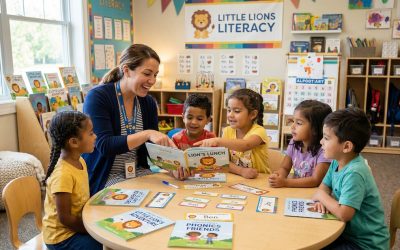
What Are Tier 2 Reading Interventions? Examples and Strategies
You noticed a student in your classroom who is falling behind in reading. The whole-class instruction that works for most of your students is not enough for this child. You want to help, but you are not sure what the next step looks like. This is exactly the situation...

How to Teach Reading to a Child with Autism
Teaching reading to a child with autism requires a different approach than what most classroom programs offer. Children on the autism spectrum often process language, sounds, and visual information in unique ways, and standard reading curricula may not account for...

Reading Intervention: 7 Common Mistakes to Avoid (and How to Fix Them)
Key Takeaways Instructional Accuracy: Avoid whole-word guessing strategies and give students direct decoding practice. Foundational Skills: Teach phonemic awareness and phonics together in a clear, explicit way. Text Choice: Use controlled decodable text so students...

How to Choose the Best Homeschool Reading Program for Dyslexia (Compared)
Finding the right homeschool reading program for a child with dyslexia can feel like trying to find a needle in a haystack, while the haystack is on fire. You want something that works, something that doesn't require a master's degree to teach, and something that...