
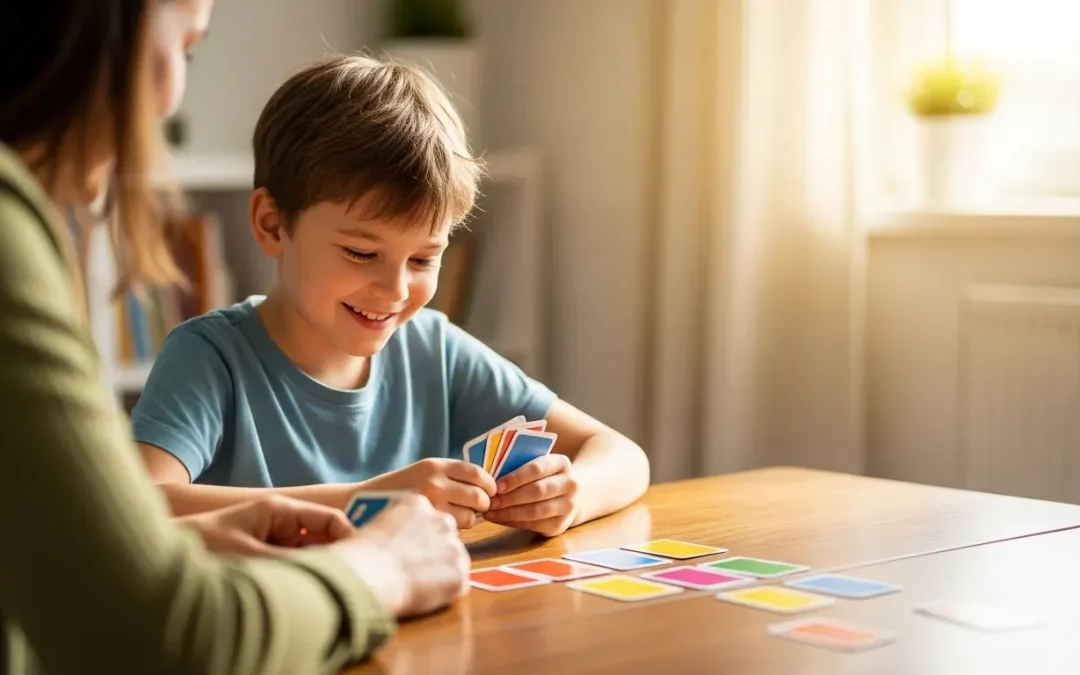
Getting a struggling reader to practice can feel like an uphill battle. The child already knows reading is hard for them, and asking them to sit down with a book or a worksheet often leads to resistance, frustration, or tears. Games change the equation. When reading practice feels like play, children engage willingly, practice longer, and build skills without the emotional weight that comes with “doing reading.”
Explore PRIDE Reading Program for a structured literacy curriculum with built-in multisensory activities that make learning to read engaging for struggling readers.
The 10 games in this article are designed for children who find reading difficult. Each one targets a specific reading skill (phonics, fluency, vocabulary, or comprehension), requires minimal setup, and works at home or in the classroom. You do not need expensive materials or a teaching degree to use them. You just need a few minutes and a willingness to play alongside your child.

Why Games Work for Struggling Readers
Struggling readers often develop a negative association with reading. They have experienced failure, correction, and comparison to peers who seem to read effortlessly. Over time, this builds avoidance. Games short-circuit that pattern in several ways:
- Lower stakes. In a game, a wrong answer is just part of playing. It does not feel like failing a test. This reduces the anxiety that blocks learning for many struggling readers.
- Built-in repetition. Games require multiple turns, which means multiple practice opportunities. A child who would resist reading a word list 10 times will happily play 10 rounds of a word game.
- Immediate feedback. Games show results right away. A child knows instantly whether their word was correct, their team scored, or they moved forward on the board. This quick feedback loop strengthens learning.
- Social connection. Playing a reading game with a parent, tutor, or classmate adds a relationship component that makes practice feel meaningful and enjoyable.
Research supports this approach. A 2019 study published in the journal Reading Research Quarterly found that game-based reading interventions produced significant gains in word recognition and fluency for students reading below grade level, particularly when the games targeted specific skill gaps.
10 Reading Games for Struggling Readers
1. Word Treasure Hunt
Skill targeted: Sight word recognition, decoding
Write target words on index cards and hide them around a room (or the whole house). Give your child a “treasure map” with clues: “Find the word under something you sit on” or “Look near something cold.” When they find a card, they read the word aloud before adding it to their treasure pile. For extra practice, have them use each found word in a sentence.
Why it works: Movement breaks up the sitting-and-reading pattern that many struggling readers dread. The hunt creates excitement and motivation to find (and read) each word.
2. Roll and Read
Skill targeted: Phonics, word families, decoding
Create a simple game board with six columns. Each column has a word family or phonics pattern at the top (-at, -ig, -op, -ump, -ake, -ight). The child rolls a die and reads a word from the matching column. If they read it correctly, they color in that space. First player to complete a column wins.
Why it works: The randomness of the die keeps it unpredictable and fun. The word family structure gives struggling readers a pattern to lean on, which builds confidence.
3. Sentence Scramble
Skill targeted: Fluency, syntax awareness, comprehension
Write a simple sentence on a strip of paper, then cut it into individual words. Shuffle the words and challenge your child to put them back in the correct order. Start with three- and four-word sentences (“The dog ran”) and gradually increase to longer, more complex sentences. Once the sentence is assembled, have your child read it aloud fluently.
Why it works: Scrambled sentences force readers to think about word meaning and sentence structure, not just decoding. Rearranging physical word cards also adds a hands-on element that benefits kinesthetic learners.
Check out our list of 12 reading comprehension games for more activities that build understanding while keeping practice fun.
4. Sound Swat
Skill targeted: Phonemic awareness, letter-sound correspondence
Spread letter cards or phonics pattern cards face-up on a table. Call out a sound (“/sh/!”) and the child uses a fly swatter to swat the matching card as fast as they can. For more advanced readers, call out a word and have them swat the card that shows the beginning blend, vowel pattern, or ending sound.
Why it works: The speed element turns phonics review into a reflex game. Struggling readers who freeze when asked to “sound it out” often respond faster and more accurately when the same skill is embedded in a fast-paced game.
5. Story Retell Relay
Skill targeted: Comprehension, sequencing, oral language
After reading a short passage together, take turns retelling the story one sentence at a time. You say the first event, your child says the next, you say the third, and so on. If someone gets stuck, they can ask for a “hint pass.” For groups, turn it into a relay where each child adds one event to the chain.
Why it works: Retelling a story requires comprehension, not just decoding. The relay format keeps struggling readers engaged because they need to listen to what was said before and think about what comes next.
6. Word Building Race
Skill targeted: Phonics, spelling, decoding
Give your child a set of letter tiles, magnetic letters, or letter cards. Call out a word (start with CVC words like “hat”). The child builds it as fast as they can. Then say, “Change one letter to make ‘hit.'” Then “Change one letter to make ‘sit.'” Keep the chain going. This is sometimes called a “word ladder” or “word chain” activity.
Why it works: Changing one letter at a time keeps the task manageable. The child practices reading and spelling simultaneously, and the chain format creates natural repetition. This activity aligns directly with Orton-Gillingham-based instruction, where students build words using letter tiles as part of every lesson.
7. Reading Bingo
Skill targeted: Sight words, vocabulary, decoding
Create bingo cards with target words instead of numbers. Call out a word (or show a picture, or read a definition), and the child finds and marks the matching word on their card. Use words the child is currently learning. For struggling readers, hearing the word and then finding it on the card combines auditory and visual processing.
Why it works: Bingo is familiar, simple, and social. It can be played one-on-one or in a small group. Every round provides multiple exposures to every word on the card, not just the ones the child marks.
8. Flashlight Reading
Skill targeted: Fluency, sight word recognition
Tape word cards to a wall, turn off the lights, and give your child a flashlight. They shine the light on a word, read it, and then move to the next one. Set a timer and count how many words they can read in one minute. Next round, they try to beat their own score. For extra fun, tape words in different rooms and make it a flashlight reading tour.
Why it works: The darkness and flashlight create novelty. Something as simple as reading words in the dark feels like an adventure instead of a chore. The timed element adds just enough challenge to motivate without creating pressure.
Explore more multisensory reading activities that combine movement, touch, and sound to help struggling readers build skills.
9. Guess the Covered Word
Skill targeted: Context clues, comprehension, vocabulary
Write a sentence on a whiteboard or paper and cover one word with a sticky note. Read the sentence aloud, skipping the covered word, and ask your child to guess what the hidden word could be. Clues come from the sentence meaning and the visible beginning letter (leave the first letter uncovered). Reveal the word and discuss whether their guess fits.
Why it works: This game teaches struggling readers to use context, a strategy many of them do not develop naturally. Instead of sounding out every word in isolation, they learn that the meaning of the sentence helps them figure out unknown words.
10. Partner Reading with a Twist
Skill targeted: Fluency, expression, comprehension
Read a decodable book or short passage together, but add a twist: take turns reading one sentence at a time. Each reader has to use a silly voice (robot voice, whisper voice, opera voice, sports announcer voice) that changes every page. If someone reads a sentence with great expression, they earn a point. If they stumble on a word, their partner helps without penalty.
Why it works: The silly voices remove performance pressure. A child who is self-conscious about their reading voice relaxes when everyone at the table sounds ridiculous. The turn-taking keeps passages short so the struggling reader does not fatigue. For decodable books that match your child’s reading level, PRIDE Reading Program includes the Little Lions decodable book series designed for struggling readers.
How to Choose the Right Game for Your Child
Not every game works for every child. The best reading game targets the specific skill your child needs to practice. Here is a quick guide:
| If Your Child Struggles With… | Try These Games | Skill Focus |
|---|---|---|
| Sounding out words | Sound Swat, Word Building Race, Roll and Read | Phonics and decoding |
| Recognizing common words quickly | Word Treasure Hunt, Reading Bingo, Flashlight Reading | Sight words and automaticity |
| Reading smoothly and with expression | Partner Reading with a Twist, Flashlight Reading | Fluency |
| Understanding what they read | Story Retell Relay, Guess the Covered Word, Sentence Scramble | Comprehension |
Start with one game and play it consistently for a week or two before adding another. Struggling readers benefit from routine and familiarity. Once a game feels easy, move to a more challenging variation or a new game targeting the next skill.
Tips for Playing Reading Games with Struggling Readers
How you play matters as much as what you play. Keep these principles in mind:
- Keep sessions to 10-15 minutes. Short, frequent game sessions produce better results than long, exhausting ones. A struggling reader’s attention and stamina are limited, so stop before frustration sets in.
- Celebrate effort, not just accuracy. When a child attempts a hard word, even if they get it wrong, that is progress. Praise the attempt: “I love how you tried sounding that out. Let me help you with the tricky part.”
- Match the difficulty to the child. If a game is too hard, the child shuts down. If it is too easy, they lose interest. The sweet spot is about 80% success rate, meaning the child gets most words right but still encounters a few challenges.
- Play alongside them, not above them. Sit at their level, take your own turns, and make your own “mistakes” occasionally. When a child sees an adult working through a tough word too, reading feels less isolating.
- Use decodable texts when possible. Games that involve reading passages work best with decodable books matched to the child’s current skill level. Books that are too difficult turn the game back into a frustration exercise.
When Games Are Not Enough
Reading games are a powerful supplement to instruction, but they are not a replacement for systematic, explicit reading intervention. If your child has been struggling with reading for more than a year, avoids reading at all costs, or shows signs of dyslexia (difficulty rhyming, slow letter recognition, reversals that persist past age seven), they may need a structured program that addresses the root cause.
Programs based on Orton-Gillingham methodology provide the kind of explicit, sequential, multisensory instruction that struggling readers and students with dyslexia need. PRIDE Reading Program is designed specifically for this purpose, with fully scripted lessons that teach phonics, decoding, fluency, and comprehension in a logical sequence. The games in this article work well alongside structured programs, giving children extra practice in a low-pressure format.
For more on choosing the right reading support, see our guides to reading comprehension games and reading fluency activities.
Frequently Asked Questions
What are good reading games for struggling readers?
Good reading games for struggling readers include Word Treasure Hunt (hiding sight words around a room), Reading Bingo (matching spoken words to written words on a bingo card), Word Building Race (building and changing words with letter tiles), and Partner Reading with silly voices. The best games target the specific skill the child needs, whether that is phonics, fluency, sight words, or comprehension, and keep the difficulty level manageable.
How long should I play reading games with my child?
Keep reading game sessions to 10-15 minutes for most struggling readers. Short, consistent sessions (3-5 times per week) produce better results than occasional long sessions. Stop before your child becomes frustrated or fatigued, even if the timer has not gone off yet.
Can reading games replace reading instruction?
No. Reading games are a supplement to instruction, not a replacement. Games provide practice and reinforcement in a motivating format, but struggling readers need explicit, systematic instruction to learn the foundational skills of reading. Programs like PRIDE Reading Program provide that structured instruction, and games work well alongside them.
Are digital reading games effective for struggling readers?
Some digital reading games can be helpful, especially those that provide adaptive difficulty and immediate feedback. However, research shows that multisensory, hands-on activities tend to be more effective for struggling readers than screen-based programs alone. The physical act of manipulating letter tiles, moving game pieces, or swatting cards engages more pathways in the brain. A combination of short digital practice and hands-on games often works best.
What if my child refuses to play reading games?
Start with a game that does not look or feel like reading practice. Sound Swat, Word Treasure Hunt, and Flashlight Reading are high-movement options that feel more like play than school. Let your child choose between two game options so they feel some control. If resistance continues, the game may be too difficult. Drop the difficulty level until your child experiences success, then gradually increase the challenge.
Making Reading Practice a Positive Experience
The goal of every reading game is the same: give a struggling reader the chance to practice without the weight of failure hanging over them. When a child associates reading with fun, connection, and success, they practice more willingly. And more practice leads to real progress.
Pick one game from this list, gather the simple materials you need, and try it tonight. You might be surprised at how much reading practice happens when it does not feel like reading practice at all.
Discover PRIDE Reading Program, a complete Orton-Gillingham curriculum that combines structured lessons with engaging, multisensory activities to help struggling readers build confidence and skills.