
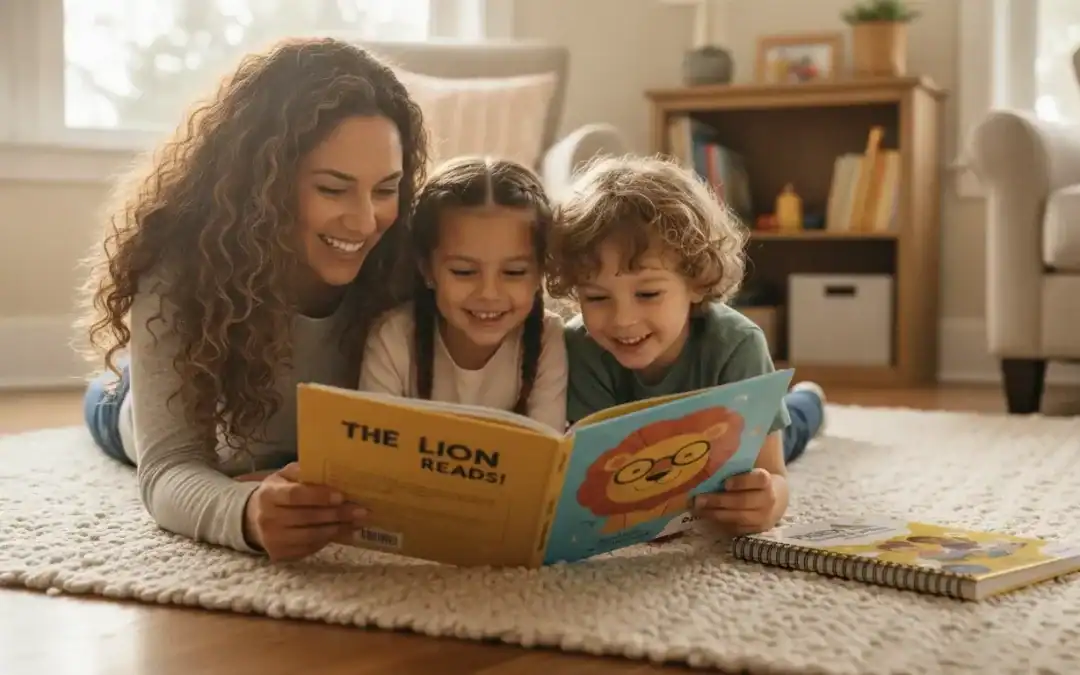
Children learn to read best when they can touch, hear, and move during play. Simple at-home games help early learners connect letters to sounds without feeling stressed. These playful moments build the core skills your child needs to become a confident reader.
Preschool phonics activities help young children connect spoken sounds to written letters through structured, multi-sensory play rather than boring worksheets. These simple at-home exercises use everyday objects, physical movements, and fun games to build the critical brain paths needed for early reading success. According to a study published by the National Institutes of Health, early sound awareness and oral language skills are key predictors of later reading success. By isolating, blending, and breaking down these spoken sounds during daily play, your child builds a strong foundation for future reading success. Using these fun, active play sessions at home prepares early learners for the structured Orton-Gillingham reading method that builds strong and confident readers.
Many parents want to help their kids learn to read but are not sure how to start at home. Let us look at what these playful games involve, how they build a reading foundation, and which activities to try today. The path begins with a clear idea of what phonics play really is.
Ready to turn playtime into reading time? Browse PRIDE’s preschool phonics and early reading products to find playful, structured tools made for your family.
What Are Preschool Phonics Activities?
Many parents wonder how to start teaching reading at home, and simple preschool phonics lessons are a great way to begin. Early preschool phonics activities are playful games that connect spoken sounds to written letters. They teach your child that the symbols on a page are not just drawings. Instead, they match the actual sounds we make when we talk.
The Alphabetic Principle
The main goal of phonics is to teach the alphabetic principle, which connects written letters to spoken sounds. Expert guides from Reading Rockets show that there is a clear and direct link between letters and sounds. When children learn this system, they can start to decode simple words. This skill forms the base for all future reading.
Phonics versus Phonological Awareness
Parents often confuse phonics with phonological awareness, but they are not the same thing. Phonological awareness is how children hear and work with sounds in spoken language. This is done fully out loud, without looking at any letters. For example, your child might clap out the beats in a word or find words that rhyme.
Phonics takes those spoken sounds and connects them to printed letters on a page. You are doing phonics when you show your child the letter B and teach them that it makes the /b/ sound. In fact, research in a National Institutes of Health study confirms that phonological awareness and print knowledge help predict later reading success. Starting these play-based games early gives your child a huge head start.
Your daily play can build four core sound skills. Each one lays a separate building block for reading.
| Skill. | What It Means. | Easy Home Example. |
|---|---|---|
| Phoneme isolation. | Hearing the first sound in a word. | Ask, “What sound does mop start with?” |
| Blending. | Joining sounds to make a word. | Say c-a-t slowly, then blend it to cat. |
| Segmentation. | Breaking a word into separate sounds. | Tap one finger for each sound in bag. |
| Letter-sound matching. | Connecting a letter shape to its sound. | Trace the letter S while saying /s/. |
Why Phonological Awareness Comes First
Hearing Sounds Before Reading Letters
Phonological awareness means hearing and working with sounds in spoken language. Before children can connect letters to print, they must hear the single sounds. When parents build phonological awareness, they help children hear syllables, rhymes, and single sounds. This oral skill sets the stage for formal reading. For example, a child must hear that the word ‘cat’ has three sounds before they learn the letters C, A, and T. This is a vital first step that makes future phonics lessons much easier to grasp.
Predicting Reading Success
Oral sound skills are a strong start for future reading. A study in the National Institutes of Health database shows that early speech and sound skills predict future reading. Early oral language and print knowledge prepare preschool children for school lessons. Children who do not have these early oral skills often struggle when they face written words. By contrast, kids who play with speech sounds early on find reading much more natural. This simple practice helps children feel secure and ready for preschool lessons.
Preventing Reading Difficulties
Teaching sounds with letters can prevent future reading struggles. Research shows that mixing sound training with phonics cut reading issues from twenty percent to just five percent in schools. This simple step helps most readers and kids who have a hard time with sounds. Training the ears first makes learning letters much easier. It helps kids feel sure as they decode words. When they start to read, they can focus on meaning instead of just trying to sound out letters.
Phoneme Isolation: Hearing the First Sounds in Words
Phoneme isolation means hearing the very first sound in a spoken word. This skill is one of the most vital steps to build phonological awareness in young kids. Before children map letters to sounds, they must learn to notice those sounds with their ears. Study data shows that early sound skills help predict reading success once children start formal school.
Play Name Games to Find the First Sound
A child’s own name is the best place to start when teaching phoneme isolation. You can say your child’s name, stretch out that first sound like M-m-m-m-ax, and ask what sound they hear at the start. Repeat this fun game with family names, pet names, and toy names around your home. Making the first sound long and loud helps young kids find and focus on it with ease.
Go on a Multi-Sensory Sound Hunt
Preschoolers learn best when they can move their bodies and use their senses. You can go on a sound hunt around your home to find objects that start with /b/ like a ball, a book, or a box. Active play keeps the game fun while helping kids connect spoken sounds to real objects. Experts agree that physical play is vital for phonics activities for preschoolers because it builds strong brain links.
Play I Spy with First Sounds
The classic game of I Spy is a simple yet powerful tool for sound isolation. You can play this game anywhere, naming a starting sound instead of a color. For example, say, “I spy something that starts with /m/,” and let your child guess words like mug, milk, or mat. Keep the game quick, give helpful clues if they get stuck, and praise their efforts to build confidence.
Blending Sounds to Make Words at Home
Blending is a key skill in learning to read. Once a child knows letter sounds, they must learn to join those sounds to read a whole word. These simple steps help children build phonological awareness and start decoding. With daily play, blending becomes an easy skill.
Simple word blending
You can teach sound blending with simple word lists. Research shows that training in blending sounds prevents reading struggles as children grow. Start with basic words that have a consonant, a vowel, and a consonant. This is often called the consonant-vowel-consonant, or CVC, pattern.
Steps for at-home blending
These simple steps will guide your daily home practice.
- Pick short words: Start with basic three-letter words like c-a-p. Say each sound in the word slowly, with a clear pause between each sound.
- Blend the sounds: Next, ask your child to join those sounds to say the whole word. You can slide your finger across the letters to show them how to blend.
- Change one sound: Use word chaining to change one sound at a time. You can change c-a-p to m-a-p, or c-a-p to c-a-t to build sound awareness.
- Add real tools: Use real cards or tiles to connect letters to sounds. Educators in early schooling find that children learn best when they can move objects while they speak.
Tips for daily practice
When you teach these skills, keep the lessons short and fun. Five to ten minutes of daily play is better than a long study session. If your child gets stuck on a word, say the blended word for them and let them copy you. This keeps the game low in stress and high in success. Praise their effort to build their pride as they learn.
Segmentation: Breaking Words Into Their Sounds
To read well, young children must learn to split spoken words into small, single sounds. This skill is called segmentation. Playing this at home will help your child build phonological awareness before they start school. When kids can break words down, they find spelling and writing much simpler later.
Playful clapping and tapping activities
You can teach this skill at home through simple, hands-on games. Start with clapping. Have your child clap out the big beats in a word like “paper.” Once they master beats, move on to single sounds. Ask them to tap a finger for each small sound they hear in “cat.”
You can also stretch words out like a rubber band. Say a word slowly. Ask your child to call out each sound. These active games turn abstract sounds into things kids can feel. Early speech and sound skills predict reading growth once they start school.
You can also use small toys or blocks as sound counters. Place three plastic blocks on the table in a line. As you say each sound in a word, have your child slide one block forward. To start, they slide blocks for the single sounds in “bag.” This visual trick helps children see how small parts build a whole word.
The role of dictation in spelling
Once children can hear single sounds, dictation can connect sounds to print. In this game, you just tell your child a word. They must then segment the word in their mind before they write the letters down. This simple step turns oral skills into real spelling success.
Letter-Sound Activities That Build Alphabet Knowledge
Young children learn best when they can touch and move objects. Linking a letter shape to its sound is a key step in preschool phonics. When you use tactile tools, your child can see, hear, and feel the letters all at once.
Multi-sensory tools for letter recognition
Physical items help children link letters to their spoken sounds. You can use simple things around the house, like plastic or wooden letters. Research from Rasmussen University shows that preschoolers do well with hands-on tools like alphabet clip cards during play.
Magnetic letters on the fridge are another great tool. Have your child pick a letter, say its name, and make its sound. You can also hide plastic letters in a sensory bin filled with rice. Let your child dig for a letter and call out the sound when they find it.
Tactile games for home practice
Sand trays offer a simple way to practice letter shapes and sounds. Pour a thin layer of sand or salt onto a small baking sheet. Ask your child to trace a letter with their finger while they say the sound.
You can also use shaving cream on a table for the same activity. The feel of the cream makes the work feel like play. This sensory feedback helps seal the link between the letter shape and its sound in their mind.
You do not need fancy toys for preschool phonics activities. Draw letters on large pieces of paper and tape them to the floor. Have your child jump onto the correct letter when you call out its sound. This blends physical movement with learning.
How the Orton-Gillingham Method Shapes Preschool Phonics Activities
The Orton-Gillingham approach is a structured way to teach reading. The PRIDE Reading Program uses this method to help children master letters and sounds. When you plan preschool phonics play, you are laying the path for step-by-step lessons.
Early multi-sensory games help children connect what they see, hear, and feel. This simple link builds strong pathways in the brain for future reading success. Young minds thrive when they can play with language in a physical way.
Multisensory learning for early readers
Young learners build skills best when they use more than one sense. Orton-Gillingham lessons use this same rule. You can bring this into your home with tactile games that use movement.
For example, children benefit from using alphabet phonics clip cards and physical tools to match letter shapes to their sounds. Tracing letters in sand or building them with clay makes the learning stick. You can also have your child jump on letter mats as they say each sound. These games teach children that written letters stand for real sounds.
Structured and systematic instruction
Success in reading comes from taking small, steady steps. Structured reading teaches one skill at a time and checks for success before moving on. Preschool games do not need to be formal, but they should follow a clear path.
Start with basic sounds before trying to blend them. These easy tasks prepare children for more advanced phonics activities for kindergarten. When a child learns in a clear order, reading feels like a natural game instead of a hard chore. By keeping the games clear, you help your child build pride and avoid future reading struggles.
Ready to give your early reader a strong start? Browse PRIDE’s phonics products and early reading levels to choose the best fit for your child.
Frequently Asked Questions
How do you teach phonics to preschoolers?
To teach phonics to young children, you must start with oral language and listening skills. Kids must hear sounds before they connect them to letters. According to researchers at the National Institutes of Health, oral language and print knowledge are key predictors of future reading success. Introduce one letter sound at a time using physical games and toys.
How do you teach phonics in a fun way?
You can make learning fun by using multi-sensory activities. Young children learn best when they can move, touch, and play. Try using letter blocks, shaving cream, or sand to trace letters while saying their sounds. You can find more ideas in our complete preschool phonics guide. Keeping lessons short, active, and playful keeps kids excited to learn.
What are some examples of pre-phonics activities?
Pre-phonics activities focus on oral language and phonological awareness without written letters. Good examples include clapping out the beats in words, matching rhyming pictures, and singing silly songs. You can also play simple sound games, like asking your child to find objects that start with the /b/ sound. These games build the ears for reading.
What are some common phonics activities?
Common activities include matching letters to their sounds using physical objects or toys. For example, according to Rasmussen University, using letter clip cards helps children connect printed letters to spoken sounds. Other popular games include searching for items that start with a specific letter sound or sorting toys by their starting sound.
Ready to Explore PRIDE’s Early Reading Levels?
Starting early reading play now prevents future struggles in class and gives your child a strong head start before they even enter preschool. When young children miss these core sound skills, they often fall behind in class and find it much harder to catch up to their peers. By starting today, you can give your child the right tools to learn to read with real ease, build deep pride, and succeed in school.
Ready to build your child’s reading foundation? Browse PRIDE’s early reading levels and phonics products to find the best fit for your family. Our simple, Orton-Gillingham tools make teaching phonics at home both fun and stress-free for you and your young child.