
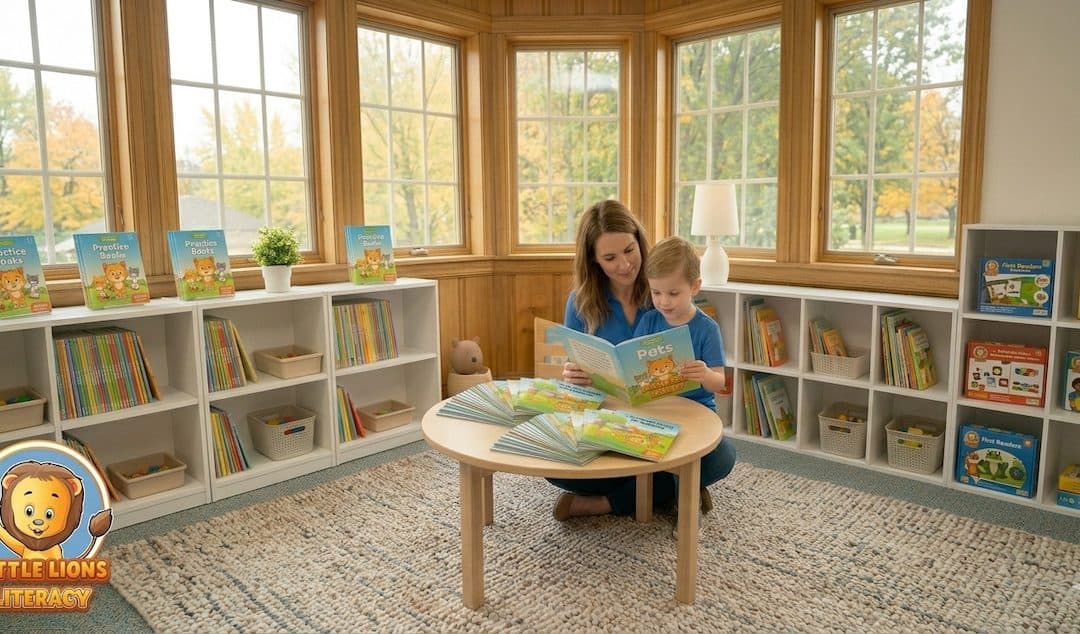
When you hear the word “phonics,” do you picture endless drills with flashcards? It’s time to rethink that. The most effective phonics instruction doesn’t have to be boring—in fact, it shouldn’t be. For kindergarteners, learning is most powerful when it’s joyful, active, and hands-on. The best phonics instruction for kindergarten is woven into games, songs, and playful activities that capture a child’s natural curiosity. By turning letter sounds into a scavenger hunt or building words with play-doh, we make learning feel like an adventure. This approach doesn’t just teach skills; it fosters a positive, lasting relationship with reading.
Key Takeaways
- Follow a Systematic Plan: Teach letter-sound connections in a logical, sequential order, starting with the most common sounds. This structured approach removes guesswork and gives children a reliable framework for decoding any new word they encounter.
- Make Learning Multisensory and Fun: Go beyond flashcards by using hands-on activities like tracing letters in sand, playing sound-based games, and incorporating movement. Engaging multiple senses makes learning stick and builds a positive attitude toward reading.
- Adapt Your Approach for Every Learner: Recognize that all children learn at a different pace. Use regular, informal check-ins to understand each student’s needs and use small groups to provide targeted support, ensuring no one gets left behind.
What is Phonics and Why is it Crucial for Kindergarteners?
Think of phonics as the instruction manual for reading. It’s the method we use to teach kids how letters and sounds work together. Instead of memorizing thousands of individual words, children learn a code. Once they crack this code, they can read almost any word they come across. For kindergarteners just starting their literacy journey, this is a game-changer. It transforms the jumble of letters on a page into meaningful words, sentences, and stories.
Effective phonics instruction is systematic and explicit, meaning it’s taught in a logical order, and the rules are explained clearly. This approach removes the guesswork and gives young learners a reliable strategy for sounding out new words. It’s the difference between hoping a child will eventually figure out how to read and giving them the exact tools they need to succeed. Building these skills early doesn’t just create better readers; it builds confident, capable learners who are set up for academic success long after they leave kindergarten. A strong phonics foundation is one of the greatest gifts you can give a new reader.
Build a Strong Foundation for Reading
Phonics lays the essential groundwork for lifelong literacy. At its core, phonics helps kids understand that letters represent sounds in a predictable way. This relationship between letters and sounds is the foundation upon which all other reading skills are built. When children grasp this concept, they begin to see reading not as a mystery, but as a puzzle they have the tools to solve. This systematic approach is a key component of structured literacy, which provides a clear, sequential path for students to follow. By making the rules of reading explicit, we empower children to approach new words with confidence instead of confusion.
Develop Essential Decoding Skills
Decoding is the skill of applying letter-sound knowledge to correctly pronounce written words. It’s the act of “sounding it out,” and it’s a direct result of strong phonics instruction. Students with solid phonics skills can connect individual sounds with letters and blend those sounds together to read words. This is a critical step that moves a child from simply knowing the alphabet to actually reading. For children with learning differences like dyslexia, explicit instruction in decoding isn’t just helpful—it’s essential. Mastering this skill early allows a child’s brain to focus on understanding the meaning of the text, rather than struggling with the words on the page.
Connect Phonics to the Science of Reading
Phonics isn’t just one of many teaching philosophies; it’s a method grounded in decades of research. A quality kindergarten phonics curriculum should align with the principles of the Science of Reading, which is a vast body of evidence on how children learn to read. This research overwhelmingly shows that explicit and systematic phonics instruction is the most effective way to teach reading to the vast majority of children. This evidence-based approach is the backbone of proven methods like the Orton-Gillingham curriculum, ensuring that what happens in the classroom is directly supported by what we know about the learning brain.
Key Components of a Strong Phonics Curriculum
A strong phonics curriculum is much more than a collection of alphabet worksheets. It’s a carefully structured, evidence-based roadmap that guides young learners from knowing their letters to reading words with confidence. When you have the right components in place, you create a powerful foundation for literacy that aligns with the Science of Reading and supports every child’s journey.
Think of these components as the essential ingredients in a recipe for reading success. Each one plays a critical role, and they work together to build skills logically and sequentially. A curriculum that includes systematic instruction, phonemic awareness, practice with blending, and a smart approach to high-frequency words is one that sets students up for a lifetime of reading. This kind of intentional, multi-faceted approach is at the heart of effective reading instruction, especially for children with learning differences like dyslexia. Let’s look at what makes each of these components so important.
Teach Letter-Sound Connections Systematically
The first step in phonics is teaching the relationship between letters and the sounds they represent. A systematic approach means you introduce these connections in a specific, logical order—not just from A to Z. You’ll start with a few common consonants and a short vowel, allowing children to begin building words right away. This method is a core principle of structured literacy, ensuring that concepts build on one another from simple to complex. By teaching letter-sound relationships explicitly and in a planned sequence, you give students a reliable framework for decoding words. This prevents confusion and helps them feel successful from the very beginning.
Develop Strong Phonemic Awareness
Before a child can connect a letter on a page to its sound, they need to be able to hear and identify that sound in a spoken word. That’s where phonemic awareness comes in. This is a purely auditory skill that involves recognizing and manipulating the individual sounds, or phonemes, in language. Activities might include identifying the first sound in the word “sun” (/s/) or clapping out the sounds in “mop” (m-o-p). Building strong phonemic awareness is a crucial prerequisite for phonics because it trains the ear to hear the sounds that letters represent. This skill is a powerful predictor of future reading success and provides a solid base for all other literacy instruction.
Master CVC Words and Blending
Once your students know a handful of letter sounds, it’s time for the magic to happen: blending. This is the process of stringing sounds together to read whole words. You’ll start with simple consonant-vowel-consonant (CVC) words like “cat,” “fin,” and “dot.” You can model how to say each sound separately (/c/…/a/…/t/) and then smoothly blend them together to say “cat.” This is a huge milestone for young learners! Practicing with CVC words gives them immediate success and shows them how phonics works in action. Using decodable books filled with words they can sound out is a fantastic way to build their confidence and fluency.
Introduce High-Frequency Words
As your students build their decoding skills, you’ll also want to introduce high-frequency words. These are the common words that appear often in text, like “the,” “a,” “is,” and “of.” Some of these words follow regular phonics patterns, but many are irregular and need to be learned by sight. A good curriculum introduces these words strategically, so students can begin reading simple sentences and stories more fluently. Teaching high-frequency words alongside decodable words helps bridge the gap between sounding out words and reading smoothly. The PRIDE Reading Program’s homeschool curriculum effectively integrates both to help children become proficient, confident readers.
What Phonics Skills Should Kindergarteners Learn?
Kindergarten is a magical year where letters on a page start turning into words. To make that happen, young learners need to master a specific set of phonics skills. A strong phonics program introduces these skills systematically, ensuring that each new concept builds on the last. This creates a solid foundation for reading and prevents gaps from forming later on. For children with learning differences like dyslexia, this explicit and sequential instruction is not just helpful—it’s essential. The goal isn’t just to memorize letters but to understand how they work together to create language. Let’s walk through the core phonics skills every kindergartener should learn.
Master Letter Names, Sounds, and Formation
The first step is automaticity with the alphabet. It’s most effective to teach letter names, their corresponding sounds, and how to write them all at the same time. This multisensory approach helps cement the connection in a child’s brain. For example, when you introduce the letter ‘s’, you say its name (“ess”), its sound (/s/), and guide them in tracing its snake-like shape. A pro tip: avoid teaching letters that look or sound similar in the same week, like ‘b’ and ‘d’ or ‘m’ and ‘n’. Spacing them out helps prevent confusion. Using engaging resources like alphabet books can make this process interactive and fun, reinforcing these foundational skills daily.
Identify Beginning and Ending Sounds
Before kids can connect sounds to letters on a page, they need to be able to hear the individual sounds in words. This skill is a key part of phonemic awareness. Start by helping students listen for and identify the beginning sounds in words. You can play simple games like, “I’m thinking of an animal that starts with the /p/ sound… pig!” Once they get the hang of initial sounds, you can move on to identifying ending sounds. This auditory skill is a critical bridge to decoding, as it trains the ear to isolate the phonemes that they will soon be matching with letters. This focus on phonology is a core principle of the Science of Reading.
Introduce Short Vowels and Simple Blends
You don’t have to wait until students know all 26 letters to start building words. Once they’ve mastered a few consonants and at least one short vowel (like ‘a’), you can introduce CVC words—consonant-vowel-consonant. Words like ‘cat,’ ‘sam,’ and ‘pat’ become instantly accessible. This is a huge confidence builder! The focus here is on blending, the process of stringing sounds together smoothly to read a word (/c/ /a/ /t/ becomes ‘cat’). Starting with CVC words gives children an immediate, tangible application for their new letter-sound knowledge. A well-designed homeschool curriculum will introduce these concepts in a logical, step-by-step manner.
Get Started with Digraphs
After students are comfortable with the alphabet and can blend CVC words, it’s time to introduce digraphs. A digraph is simply two letters that team up to make one new sound. The most common ones to teach in kindergarten are ‘sh,’ ‘th,’ ‘ch,’ ‘wh,’ and ‘ck.’ Explain this concept clearly—when ‘s’ and ‘h’ are next to each other, they stop making their own sounds and instead say /sh/. Introducing digraphs opens up a whole new world of words for kids to read, like ‘ship,’ ‘shop,’ and ‘chick.’ Practicing these new skills with decodable books that feature digraphs is the perfect way to help students apply what they’ve learned.
How to Make Phonics Fun for Young Learners
Let’s be honest: phonics instruction can sometimes feel like a series of repetitive drills. But it doesn’t have to be that way. When we make learning playful and engaging, we help kindergarteners build positive associations with reading that can last a lifetime. The key is to move beyond flashcards and worksheets and bring phonics to life through activities that capture a child’s natural curiosity and love for play.
Making phonics fun isn’t just about entertainment; it’s about effective teaching. When children are actively involved and enjoying themselves, they’re more likely to retain what they’ve learned. By incorporating games, movement, and hands-on activities, you can transform your phonics lessons from a chore into one of the most anticipated parts of the day. These strategies are especially powerful for young learners, including those with dyslexia, as they create stronger, more memorable pathways for learning. The goal is to help children see themselves as capable readers from the very beginning.
Use Multisensory Teaching Methods
One of the most effective ways to make phonics stick is to use a multisensory approach. This simply means engaging more than one sense at a time—sight, sound, touch, and even movement. When a child sees a letter, says its sound, and traces its shape in sand all at once, they are creating multiple pathways in the brain to store that information. This method is a cornerstone of the Orton-Gillingham approach because it’s so effective. You can easily bring multisensory learning into your routine by having kids form letters with play-doh, tap out sounds on their arms, or use magnetic letters on a whiteboard.
Play Interactive Games and Activities
Children learn best through play, and phonics is the perfect subject to turn into a game. Instead of a simple drill, try playing letter-sound bingo, a matching game with picture cards, or “I Spy” using letter sounds (“I spy something that starts with the /m/ sound”). These activities feel like fun, but they are powerful tools for reinforcing letter-sound connections. Games also provide a low-pressure way to see which skills students have mastered and where they might need a little more support. You can easily weave these simple games into your daily lessons without a lot of prep, making learning feel spontaneous and exciting.
Get Kids Moving with Active Learning
Kindergarteners are full of energy, so why not channel it into learning? Incorporating movement into your phonics lessons helps keep children focused and caters to kinesthetic learners who need to move to learn. You could organize a letter scavenger hunt, have kids jump on floor letters to spell out simple words, or play a game of “Letter Sound Toss” with a beanbag. Active learning makes abstract concepts like letter sounds more concrete and memorable. It’s a simple adjustment that can make a huge difference in maintaining engagement and helping every child in your homeschool curriculum or classroom succeed.
Practice Skills with Decodable Books
There is nothing more rewarding for a young learner than realizing they can actually read a book on their own. This is where decodable books come in. These books are carefully written using only the letter-sound patterns that children have already been taught, allowing them to apply their new phonics skills in a meaningful way. Using decodable books gives children the practice they need to build fluency and confidence. It bridges the gap between learning letters and sounds in isolation and reading connected text, proving to them that the skills they are learning have a real and exciting purpose.
How to Differentiate Phonics Instruction for Every Student
Every kindergartener walks into the classroom with a unique set of skills and experiences. Some might already know their letters, while others are just starting their literacy journey. Differentiating your phonics instruction simply means meeting each child where they are and giving them the specific support they need to grow. It’s not about creating dozens of separate lesson plans, but about being flexible and intentional with your teaching.
By making small adjustments to your activities, grouping, and pacing, you can ensure every student feels successful and confident. Whether you’re supporting a child with a learning difference or challenging a student who’s ready for more, differentiation is the key to building a classroom of strong, capable readers. It’s about providing the right tools and instruction at the right time, so every learner can thrive.
Support Students with Dyslexia and Learning Differences
For students with dyslexia and other learning differences, a standard phonics lesson might not be enough. These learners often benefit from scaffolded instruction, where you break down concepts into smaller, more manageable steps and provide plenty of support along the way. Think of it as building a sturdy ladder for them to climb, one rung at a time.
Leveraging multisensory approaches is also incredibly effective. Instead of just seeing and hearing letters, students can trace them in sand, build them with clay, or tap out sounds on their arms. Engaging multiple senses helps create stronger neural pathways for learning. These strategies are fantastic for all children, but they are absolutely essential for students who need extra support to make those crucial letter-sound connections stick.
Adapt to Different Learning Styles and Pacing
Differentiating your phonics instruction means giving students activities that are just right for their current abilities. In any kindergarten class, you’ll have a wide range of skill levels. Some children might be working on mastering letter sounds, while others are ready to start blending CVC words. A one-size-fits-all approach can leave some students feeling overwhelmed and others feeling bored.
The goal is to provide flexible learning paths. This might mean offering different practice activities or allowing students to work at their own pace. For example, one child might be using alphabet books to solidify letter recognition, while another is ready for simple decodable stories. By adapting to individual pacing, you ensure every child is appropriately challenged and making steady progress.
Apply Structured Literacy Methods
One of the most effective ways to differentiate is by using a structured literacy approach. Methods like Orton-Gillingham are inherently diagnostic and prescriptive, making them perfect for meeting individual needs. This approach uses systematic phonics instruction, starting with the most basic alphabetic principles and gradually moving to more complex skills.
This explicit and sequential process is a game-changer for students who struggle with reading. It breaks down the code of language into logical, digestible parts, leaving no room for guessing. Because the instruction is so clear and cumulative, it provides the built-in support that many learners need. It ensures that students build a solid foundation before moving on, which helps prevent gaps in their learning.
Use Small Groups for Targeted Instruction
Working with small groups is one of the most powerful tools for differentiation. When you pull a few students together, you can provide focused instruction that targets their specific needs. This is your chance to re-teach a concept, offer extra practice, or introduce a more advanced skill. It allows you to give students more personalized attention and immediate feedback than you can with the whole class.
You can group students based on their current skill levels, which might change from week to week. For example, one group might work with you on blending sounds, while another group practices writing letters independently. This strategy is a cornerstone of effective classroom instruction and is central to many successful school district curriculum implementations.
Common Phonics Challenges (and How to Solve Them)
Teaching phonics to a room full of kindergarteners is incredibly rewarding, but it definitely comes with its own set of challenges. Every child walks in with a different background, learning style, and level of readiness. One student might already be sounding out words, while another is still learning to hold a pencil. Keeping everyone engaged, motivated, and moving forward can feel like a juggling act. The key is to see these challenges not as obstacles, but as opportunities to create a more dynamic and supportive learning environment. By anticipating common hurdles and having a toolbox of strategies ready, you can ensure every student builds a strong foundation for reading success. Let’s walk through some of the most frequent phonics challenges and explore practical, effective solutions.
Handle Different Student Readiness Levels
It’s rare for every student to start at the same place. Some children may enter your classroom knowing all their letters and sounds, while others are just beginning their literacy journey. The solution is to differentiate your instruction, meeting each child exactly where they are. Start by using simple assessments to gauge their current abilities. This information allows you to form small groups for targeted practice on specific skills. For a student struggling with letter-sound correspondence, you can provide more hands-on practice, while another group works on blending CVC words. A flexible, structured literacy curriculum provides the framework to help you tailor activities, ensuring every child receives the right level of support and challenge to progress confidently.
Keep Young Learners Engaged and Motivated
Kindergarteners learn best when they’re having fun. If phonics instruction feels like a monotonous drill, you’ll quickly see their attention wander. The best way to keep young learners motivated is to make learning an active, multisensory experience. Ditch the endless worksheets and bring in activities that engage their senses. Have them trace letters in sand or shaving cream, build words with magnetic tiles, or clap out the syllables in a name. You can turn phonics practice into a game by singing songs about letter sounds or going on a classroom scavenger hunt for objects that start with a specific letter. When learning feels like play, children are more likely to stay focused, retain information, and develop a genuine love for reading.
Integrate Phonics with Other Literacy Skills
Phonics shouldn’t be taught in a vacuum. The ultimate goal is for children to read and understand text, and they need to see how phonics fits into that bigger picture. An effective approach, like the Orton-Gillingham method, explicitly connects phonics to other essential literacy skills like phonological awareness, blending, and segmenting. As you teach a new letter sound, immediately show students how to use it in real words. Use decodable books that feature the specific phonics patterns they are learning, so they can experience success right away. This integration helps them understand that learning letter sounds is a powerful tool that unlocks the ability to read stories and communicate ideas, making the entire process more meaningful.
Address the Needs of a Mixed-Ability Classroom
A mixed-ability classroom includes a wide spectrum of learners, from those who grasp concepts quickly to those who need more repetition and support, including students with learning differences like dyslexia. To effectively teach everyone, you need to be flexible and adaptive in your approach. Using varied instructional methods is key. Some students might thrive with visual aids, while others need to move their bodies to learn. Small, flexible groups allow you to provide targeted instruction based on students’ immediate needs. By using a systematic and explicit program, you create a predictable routine that helps all students feel secure. This structured yet flexible environment ensures that every child has the opportunity to build their skills and succeed.
The Most Effective Phonics Activities for Kindergarten
The best way to teach phonics is to make it feel like play. When children are engaged and having fun, they absorb information without even realizing they’re learning. The key is to incorporate activities that are interactive, multisensory, and consistent. By weaving phonics practice into your daily interactions, you can build a strong foundation for reading in a way that feels natural and exciting for your kindergartener.
These activities are designed to be simple, requiring minimal prep while delivering maximum impact. They align with a structured literacy approach, ensuring that you are building skills in a logical, effective order. Whether you’re a teacher in a classroom or a parent at home, you can use these ideas to help your young learner connect sounds to letters and start on the path to becoming a confident reader.
Establish a Consistent Daily Routine
Consistency is your best friend when teaching phonics. Short, regular practice sessions are far more effective than long, infrequent ones. Aim for just a few minutes each day to talk about letters and sounds. This doesn’t have to be a formal lesson at a desk. You can easily integrate phonics into everyday moments. While driving, ask your child to spell simple CVC words like “cat” or “sun.” Point out letters on signs and ask what sound they make. Keeping these interactions quick and playful helps build confidence and makes learning a positive experience. A structured program, like the PRIDE homeschool curriculum, can provide a simple, open-and-go framework for these daily routines.
Try Hands-On Letter Tracing and Building
Young children learn best when they can engage multiple senses. Hands-on activities are perfect for teaching letter formation and sounds because they connect touch and movement with sight and sound. One of the most effective multisensory techniques is letter tracing. Have your child trace a letter with their finger in a shallow tray of sand, sugar, or even shaving cream while saying the letter’s sound out loud. You can also use magnetic letters, play-doh, or pipe cleaners to build letters. This tactile experience helps cement the letter’s shape and corresponding sound in a child’s memory, which is especially helpful for students with learning differences like dyslexia.
Use Songs, Rhymes, and Sound Games
Music and rhythm are powerful tools for learning. Singing songs about letter names and sounds makes phonics practice joyful and memorable. Classic tunes like the alphabet song are a great start, but you can also find countless videos and songs online that focus on specific letter sounds. Rhyming games also build phonemic awareness, a critical pre-reading skill. Ask your child, “What word rhymes with mat?” or read rhyming stories together and have them listen for the rhyming pairs. These simple sound games train their ears to hear the individual sounds in words, preparing them for more complex phonics and decoding.
Play ‘Mystery Bag’ and Scavenger Hunts
Turn phonics into a game with a fun ‘Mystery Bag’ activity. Fill a bag with several small items that all start with the same sound, like a ball, a book, and a banana for the /b/ sound. Have your child pull out one item at a time, name it, and identify the beginning sound. This helps them practice isolating initial phonemes in a playful, hands-on way. You can also do a letter sound scavenger hunt. Call out a sound, like /m/, and have your child run to find something in the room that starts with that sound. Once they master initial sounds, you can use decodable books to help them apply their new skills in context.
Build a Comprehensive Phonics Program That Works
Putting together an effective phonics program is about more than just a single activity or worksheet. It’s about creating a complete system that supports young readers from every angle. A strong program is built on a logical plan, consistent check-ins, an engaging classroom, and a solid home-school connection. When these four pieces work together, you create a powerful foundation that helps every kindergartener build the confidence and skills they need to become successful readers.
Create a Systematic Scope and Sequence
A great phonics program doesn’t leave learning to chance. It follows a systematic scope and sequence, which is essentially a roadmap that introduces skills in a logical order. You’ll want to start with the basics, like the most common letter sounds, and gradually build from there. This approach ensures that children aren’t overwhelmed and that each new concept connects to what they’ve already learned. A well-planned sequence is a core principle of structured literacy, as it helps students master foundational skills before moving on to more complex ones like blends and digraphs. This deliberate progression makes the process of learning to read feel manageable and achievable for young minds.
Assess and Monitor Progress Regularly
To know where you’re going, you need to know where you are. Regular assessment is key to understanding what your students have mastered and where they might need a little extra help. This doesn’t have to mean formal, stressful tests. You can assess progress through fun games, simple one-on-one checks, and careful observation during activities. Can a child identify the first sound in the word “cat”? Can they blend the sounds /m/, /a/, /p/ to read “map”? Tracking these small milestones allows you to tailor your instruction, form small groups for targeted practice, and ensure no student falls behind. For children needing more intensive support, working with PRIDE Reading Specialists can provide that focused, one-on-one attention.
Design a Literacy-Rich Learning Environment
Your classroom is one of your most powerful teaching tools. A literacy-rich environment immerses children in letters, sounds, and words in a way that feels natural and exciting. Think beyond posters on the wall. Label items around the room, create an alphabet line at eye level, and build a cozy reading corner filled with engaging books. Incorporate hands-on materials like magnetic letters, sand trays for tracing, and play-doh for building letters. Having a great selection of decodable books readily available gives students the chance to apply their new phonics skills immediately, which is incredibly rewarding and builds their confidence as readers.
Partner with Parents for Home Support
Learning to read is a team effort, and parents are your most valuable players. When you partner with families, you extend phonics practice beyond the school day and reinforce skills in a meaningful way. Keep parents in the loop about what you’re learning in class with a simple weekly email or handout. Suggest fun, easy activities they can do at home, like playing “I Spy” with letter sounds during a car ride or pointing out letters on signs at the grocery store. For families who want to take a more active role, a structured homeschool curriculum can provide the tools and guidance they need to support their child’s reading journey effectively.
Related Articles
- Fun & Engaging Phonics Activities for Kindergarten – Structured Literacy | Pride Reading Program
- 70 Phonograms List: Your Printable Guide for Reading & Spelling – Structured Literacy | Pride Reading Program
- Phonics for Preschoolers: Building Early Literacy Skills – Structured Literacy | Pride Reading Program
- 70 Phonograms List for Reading | PRIDE Program
Frequently Asked Questions
What’s the difference between phonics and phonemic awareness? That’s a great question, as these two terms are often used interchangeably but mean very different things. Think of phonemic awareness as a listening skill. It’s the ability to hear and play with the individual sounds in spoken words, all without looking at any letters. Phonics is the next step, where you connect those sounds to the actual letters on a page. So, hearing the three sounds in the word “ship” (/sh/-/i/-/p/) is phonemic awareness, while knowing that the letters s-h-i-p represent those sounds is phonics.
My kindergartener knows the alphabet song. Is that enough for them to learn to read? Knowing the alphabet song is a wonderful first step! It shows your child is familiar with the names of the letters. However, reading requires a different skill: knowing the sounds that each letter makes and how to blend those sounds together to form words. Phonics instruction is what bridges that gap. It moves a child from simply singing the names “bee” and “ay” and “tee” to being able to look at the word “bat,” say the sounds /b/ /a/ /t/, and read the word.
Should I focus on phonics or sight words? You don’t have to choose! The most effective reading programs teach these skills in tandem because they serve different purposes. Phonics gives children the power to decode the vast majority of words they will encounter. At the same time, teaching a few high-frequency words by sight—especially those that don’t follow the rules, like “the” or “was”—helps build fluency and allows them to start reading simple sentences much faster. The two skills work together to create confident, capable readers.
How do I know if my child is falling behind in phonics? First, remember that every child learns at their own pace. However, by the end of kindergarten, most children should be able to recognize the letters of the alphabet and name their most common sounds. They should also be starting to blend sounds together to read simple three-letter words, like “cat” or “sun.” If your child is consistently struggling to hear the beginning sound in a word or has trouble remembering letter sounds after lots of fun, multisensory practice, it may be a good idea to chat with their teacher about providing some extra support.
My child finds phonics boring. How can I get them interested? This is a common challenge, and the solution is almost always to turn practice into play. If your child groans at the sight of a worksheet, put it away. Instead, try hands-on activities that feel like a game. You can trace letters in sand or shaving cream, build words with magnetic tiles on the fridge, or go on a scavenger hunt for things around the house that start with the /m/ sound. Keeping the sessions short, positive, and active makes all the difference in helping your child see phonics as fun, not a chore.