

If your child is learning to read or you teach beginning readers, you have probably come across the term “decodable books.” These carefully designed texts are one of the most effective tools available for building strong reading skills from the ground up. But what exactly makes a book decodable, and how should you use them at home or in the classroom?
Explore the Little Lions Decodable Books to give your child or students the practice they need to become confident, independent readers.
This guide covers everything parents and teachers need to know about decodable books, including what they are, how they work, why the research supports them, how they compare to leveled readers, and how to choose the best ones for your learner.

What Are Decodable Books?
Decodable books are texts written so that the majority of words can be sounded out using phonics skills a student has already been taught. Unlike other early reading materials that may include unpredictable vocabulary, decodable books follow a controlled scope and sequence. Each book aligns with specific letter-sound patterns, giving readers the chance to practice what they know in a real reading context.
For example, a decodable book designed for a child who has learned short vowel sounds and basic consonants might include sentences like “The cat sat on a mat.” Every word in that sentence can be decoded using the phonics patterns the student has already mastered.
A high-quality decodable book maintains a decodability percentage of 90% or higher. This means at least 90% of the words can be sounded out using the phonics skills taught up to that point. The remaining words are typically high-frequency words that have been explicitly taught as sight words or heart words.
Why Do Decodable Books Matter for Early Readers?
The Science of Reading, a large body of research from cognitive science, psychology, and neuroscience, shows that children learn to read most effectively when they receive explicit, systematic phonics instruction paired with opportunities to practice those skills in connected text. Decodable books provide exactly that practice opportunity.
When children read texts that match their current skill level, they build the neural pathways needed for automatic word recognition. Instead of guessing from pictures or memorizing word shapes, students learn to rely on the alphabetic code. This leads to several important outcomes:
- Stronger decoding skills. Repeated practice with controlled text reinforces letter-sound relationships until they become automatic.
- Greater accuracy. Students read with a high accuracy rate, typically 95% or above, because the text matches what they have been taught.
- Improved fluency. As decoding becomes automatic, students read more smoothly and with better expression. Learn more about strategies to improve reading fluency.
- Increased confidence. Nothing builds a young reader’s confidence faster than reading an entire book independently. Decodable books create repeated experiences of success.
Decodable Books vs. Leveled Readers: What Is the Difference?
Parents and teachers often wonder how decodable books differ from leveled readers. While both are used in early reading instruction, they are organized very differently.
Leveled readers are categorized by overall text difficulty using factors like sentence length, vocabulary complexity, and topic familiarity. A Level A book might have short sentences and common words, while a Level M book has longer sentences and more complex ideas. However, leveled readers do not control which phonics patterns appear in the text. A beginning reader might encounter words they have no strategy to decode.
Decodable books are organized by phonics skill rather than overall difficulty. Each book is designed so students can decode the vast majority of words using the letter-sound relationships they have already mastered. New patterns are introduced gradually, and previously taught patterns are reviewed consistently.
| Feature | Decodable Books | Leveled Readers |
|---|---|---|
| Organization | By phonics skill sequence | By overall text difficulty |
| Word control | 90%+ words match taught phonics | No phonics alignment |
| Reading strategy | Decoding (sounding out) | Multiple cues (pictures, context) |
| Best for | Building decoding accuracy | Practicing comprehension |
| Research alignment | Science of Reading | Balanced literacy |
Both types of books have a place in literacy instruction, but decodable books should be the primary practice text for beginning and struggling readers who are still building foundational decoding skills.
How Do Decodable Books Support Structured Literacy?
Structured literacy is an approach to reading instruction that is explicit, systematic, and cumulative. It teaches the structure of language directly, including phonology, sound-symbol associations, syllable patterns, morphology, syntax, and semantics. Decodable books are a natural companion to structured literacy instruction because they reinforce the exact skills being taught in lessons.
In a structured literacy classroom, a teacher might spend a lesson introducing consonant digraphs like “sh” and “th.” The corresponding decodable book would feature stories filled with words like “ship,” “shop,” “thin,” and “that.” Students immediately apply what they learned in the lesson to real reading, which strengthens retention and builds fluency.
Programs based on Orton-Gillingham methodology pair particularly well with decodable books because both follow a systematic, sequential approach to phonics instruction.
Looking for a structured literacy program with aligned decodable books? Browse the PRIDE Reading Program curriculum to find the right fit for your child or classroom.
How to Choose the Right Decodable Books
Not all decodable books are created equal. Here is what to look for when selecting decodable texts for your child or students:
1. Alignment With Your Phonics Scope and Sequence
The most important factor is that the books match the specific letter-sound patterns you are teaching, in the order you are teaching them. If your program introduces short vowels first, then consonant digraphs, then blends, your decodable books should follow the same progression. Misaligned books introduce patterns students have not learned yet, which leads to frustration.
2. High Decodability Percentage
Look for books where at least 90% of the words can be sounded out using the phonics skills taught up to that point. Some publishers list the decodability percentage for each title. If they do not, check a few pages manually. Count the words the student can decode versus those they cannot.
3. Engaging Stories and Illustrations
Decodable does not have to mean boring. The best decodable books tell real stories with characters, problems, and resolutions. Illustrations should support the narrative without encouraging guessing. A child should be able to read the words on the page, not rely on the pictures to figure out what the text says.
4. Age-Appropriate Content
This is especially important for older students who need decodable practice. A fourth grader who struggles with reading should not be handed a book with baby animals and toddler themes. Look for decodable books with content that respects the student’s age and interests.
5. Progressive Complexity
A good decodable book series builds in complexity over time. Early books might focus on CVC (consonant-vowel-consonant) words, while later books introduce digraphs, blends, long vowel patterns, and multisyllabic words. This progression keeps students challenged without overwhelming them.

How to Use Decodable Books at Home
Parents play a critical role in supporting their child’s reading development. Here is how to make the most of decodable books at home:
- Match the book to your child’s current phonics level. If your child is working on short vowel sounds, choose books that focus on those patterns. If you are unsure of your child’s level, a reading assessment can help you find the right starting point.
- Read together daily. Consistent practice matters more than long sessions. Even 10 to 15 minutes of daily reading with decodable books can make a significant difference.
- Let your child do the reading. Resist the urge to jump in and supply words. Give your child time to sound out unfamiliar words. If they get stuck, prompt them to use their phonics skills rather than telling them the word.
- Celebrate success. Point out how many words your child read correctly. Praise the effort of sounding out a tricky word. Building confidence is just as important as building skills.
- Reread favorites. Rereading builds fluency and automaticity. If your child loves a particular decodable book, read it again. Repeated readings are not a sign of stalling; they are a sign of deepening mastery.
How to Use Decodable Books in the Classroom
For teachers, decodable books are a powerful tool for small group instruction, independent reading practice, and reading intervention. Here are practical strategies for classroom use:
- Use them during guided reading groups. After teaching a new phonics skill, distribute decodable books that target that pattern. Listen to students read aloud and provide corrective feedback in real time.
- Stock your classroom library. Include a range of decodable books at different phonics levels so students can self-select texts that match their current skills during independent reading time.
- Pair with phonics activities. Use decodable books as the application step after hands-on phonics instruction. Students practice a pattern with manipulatives or whiteboards, then apply it in a decodable text.
- Monitor progress. Track which decodable book levels each student is reading. When a student can read a level with 95%+ accuracy and good fluency, they are ready to move to the next phonics pattern.
- Support struggling readers. Students with dyslexia or other reading difficulties benefit greatly from decodable books because the controlled text removes the guesswork that makes reading so frustrating for them.
When Should Students Transition Away From Decodable Books?
Decodable books are essential during the beginning stages of reading instruction, but students do not read them forever. The transition typically happens gradually as students master more phonics patterns and can decode a wider range of words independently.
Most students begin transitioning away from decodable books toward the end of first grade or beginning of second grade, though this varies by student. The key indicators that a student is ready include:
- Automatic recognition of common letter-sound patterns, including digraphs, blends, and long vowel teams
- Ability to read grade-level text with 95% or higher accuracy
- Smooth, fluent oral reading with appropriate expression
- Successful self-correction when they misread a word
For students who are behind grade level or who have reading difficulties, decodable books may remain an important part of their instruction for longer. The goal is always to match the text to the student’s current skill level, regardless of age or grade.

Frequently Asked Questions About Decodable Books
What does “decodable” mean?
A text is decodable when the majority of its words can be sounded out using phonics skills the reader has already been taught. A decodable book typically has a decodability rate of 90% or higher, meaning the student can successfully read most of the text using the letter-sound patterns they know.
What is the difference between phonics and decodable books?
Phonics is the method of teaching the relationships between letters and sounds. Decodable books are the practice material that lets students apply those phonics skills in connected text. Think of phonics as the lesson and decodable books as the homework where students practice what they learned.
When should you stop using decodable texts?
Students typically transition away from decodable books once they can decode most common phonics patterns automatically and read grade-level text with 95% accuracy or higher. For most students, this happens around the end of first grade or beginning of second grade, though struggling readers may benefit from decodable practice for longer.
What are the best decodable books?
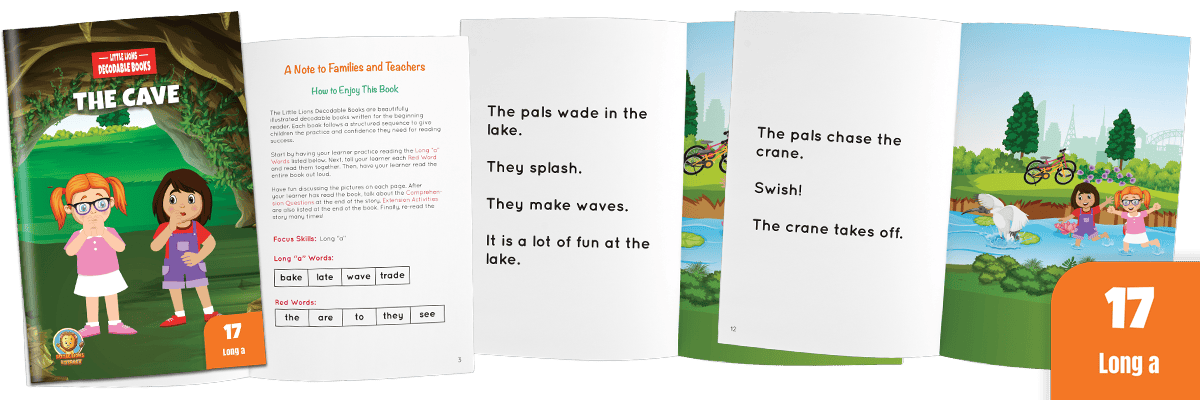
The best decodable books align with a clear phonics scope and sequence, maintain a high decodability percentage (90%+), tell engaging stories, and are age-appropriate. The Little Lions Decodable Books from PRIDE Reading Program, for example, are designed to match an Orton-Gillingham phonics progression with stories that keep young readers engaged.
Give Your Child or Students the Right Books to Build Reading Success
Decodable books are one of the most practical, research-backed tools for teaching children to read. They provide the controlled, systematic practice that beginning and struggling readers need to build strong decoding skills, develop fluency, and gain the confidence that comes from real reading success.
Whether you are a parent looking for the right books for your child, a teacher searching for materials that align with your phonics instruction, or a reading specialist working with students who need targeted intervention, decodable books should be a core part of your literacy toolkit.
Ready to get started? Shop the Little Lions Decodable Book Series or contact PRIDE Reading Program to find the right materials for your learner.