
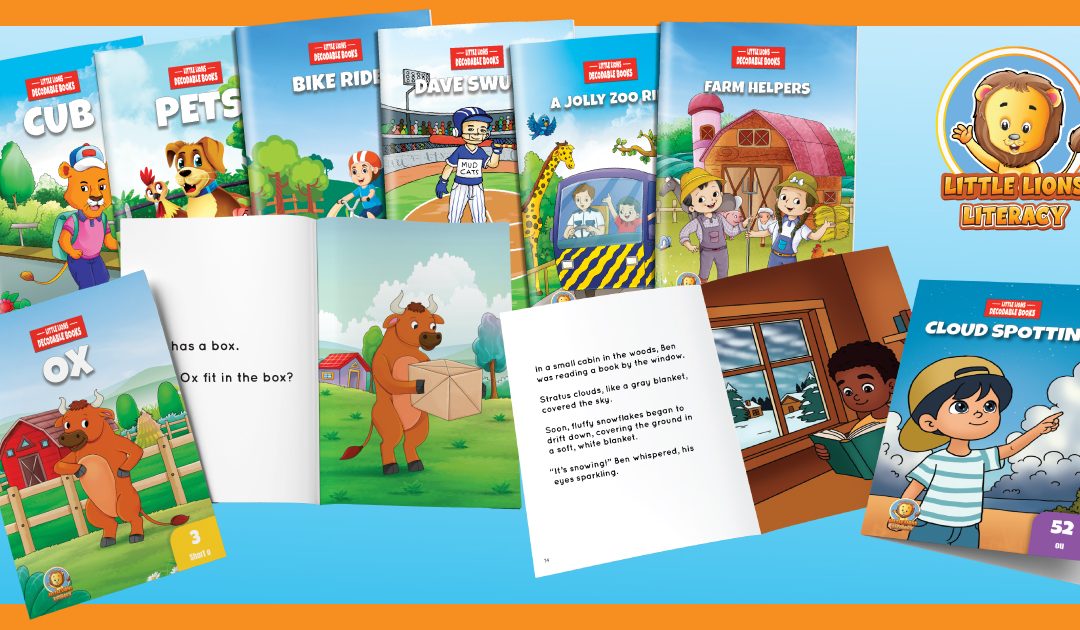
Getting decodable readers into your students’ hands is one of the most effective moves you can make for early reading instruction. These carefully controlled texts give beginning readers a chance to practice the exact phonics patterns they have been taught, building accuracy and confidence with every page they turn.
See how PRIDE Reading Program’s structured literacy curriculum pairs with decodable readers to support reading success in your classroom.
But having a set of decodable books on your shelf is not the same as using them well. The difference between a decodable reader collecting dust and one that accelerates student growth comes down to how you select, introduce, and integrate these texts into your daily routine. This guide walks you through the practical steps for making decodable readers a working part of your literacy block, whether you teach kindergarten, lead a reading intervention group, or homeschool your own children.
What Makes a Decodable Reader Different from Other Early Texts?
A decodable reader is a book where 90% or more of the words can be sounded out using phonics patterns the student has already learned. That distinction sets decodable texts apart from leveled readers, which are organized by overall difficulty and often include words students cannot yet decode. If you want a deeper look at the research behind decodable texts, read our article on what decodable readers are and why they matter.
The practical difference for your classroom is this: when a student picks up a decodable reader that matches their current phonics level, they can read most of the words independently. They are not guessing from pictures or memorizing word shapes. They are applying letter-sound knowledge to real text, and that practice is what builds the neural pathways for automatic decoding.
How to Choose the Right Decodable Readers for Your Students
Selecting the right decodable text is the first step that many teachers rush past. A mismatch between the book and the student’s phonics level creates frustration instead of practice. Here is how to get the match right.
1. Map Your Phonics Scope and Sequence
Start with the phonics skills you have already taught. If your students have covered short vowels, consonant digraphs (sh, th, ch, wh), and beginning blends, you need decodable readers that use those patterns and nothing beyond them. Books that introduce vowel teams or r-controlled vowels before you have taught those patterns will undermine student confidence.
2. Check the Decodability Percentage
High-quality decodable readers maintain a decodability rate of 90% or higher. That means at least 9 out of 10 words in the text can be sounded out with skills the student already has. The remaining words are typically high-frequency words that have been explicitly taught as sight words or heart words. Ask your publisher for decodability data, or count it yourself by sampling a page and tallying decodable versus non-decodable words.
3. Consider Age and Interest
A decodable reader for a kindergartener looks different from one designed for an older struggling reader. Older students need texts with age-appropriate topics and chapter-style formats that respect their maturity while still controlling the phonics complexity. Engagement matters because a student who finds the story boring will not read with attention, regardless of how well the text matches their skill level.
4. Align with Your Curriculum
The most effective approach is to use decodable readers that follow the same scope and sequence as your phonics program. PRIDE Reading Program’s Little Lions Decodable Books, for example, are designed to align directly with a structured literacy scope and sequence. Each set progresses through phonics patterns in the same order students learn them, so the books always match what has been taught.
How to Introduce Decodable Readers in Your Lessons
Once you have the right books, the way you introduce them shapes whether students see reading as a success experience or a test they might fail. A consistent introduction routine builds trust and sets students up for accurate reading from the first page.
Start with a Brief Phonics Warm-Up
Before opening the book, spend two to three minutes reviewing the phonics pattern featured in the text. If the decodable reader focuses on consonant blends, have students practice blending a few words orally or on a whiteboard. This primes their brains to recognize those patterns when they appear in the story. Activities like phonemic awareness exercises work well as quick warm-ups before reading.
Preview Heart Words
Identify the two to four high-frequency words in the text that cannot be fully decoded. Teach or review these words explicitly before reading. Write each word, segment its sounds together, point out which parts are regular and which parts need to be memorized. When students know these words before they start reading, they will not stumble over them mid-sentence.
Give a One-Sentence Book Introduction
Keep it short. Something like, “This book is about a cat who gets lost at the park.” You are providing just enough context for comprehension without giving away the story or encouraging picture-based guessing. Avoid walking through every page or pre-teaching vocabulary beyond the heart words.
Step-by-Step: Running a Decodable Reader Lesson
A well-structured decodable reader lesson takes 15 to 20 minutes and fits into your small-group reading block. Here is a practical routine you can use starting tomorrow.
- Phonics warm-up (2-3 minutes): Review the target phonics pattern with quick blending or segmenting practice.
- Heart word review (2 minutes): Introduce or review the high-frequency words students will encounter in the text.
- Book introduction (1 minute): Give a brief, one-sentence summary of the story to set context.
- Student reading (5-8 minutes): Students read the text independently while you listen in and prompt as needed. If a student finishes early, have them reread for fluency or read a previously completed decodable.
- Teaching point (2 minutes): Address a specific skill you noticed during reading, such as a blending strategy or a tricky word pattern.
- Comprehension check (2-3 minutes): Ask two to three questions about the text. Even with simple stories, students can practice locating information and thinking about character actions.
- Written response (3 minutes, optional): Have students write a sentence using the phonics pattern from the book. This reinforces the connection between reading and spelling.
Explore PRIDE Reading Program’s classroom curriculum for fully scripted lesson plans that include decodable reader integration at every level.
How Often Should Students Read Decodable Texts?
Daily practice with decodable readers produces the strongest results. Research from the Science of Reading consistently shows that frequent, distributed practice with decodable text builds the automatic word recognition that skilled readers rely on. According to the National Reading Panel’s analysis of over 100,000 reading studies, systematic phonics instruction paired with connected text practice produces measurable gains in both accuracy and fluency.
For most classroom schedules, this means incorporating decodable readers into your small-group reading time at least four to five days per week. Each session does not need to be long. Fifteen minutes of focused reading practice with a well-matched decodable reader is more productive than 30 minutes with a text that is too difficult or too easy.
Students should also reread completed decodable readers. Rereading builds fluency because students can focus on smooth, expressive reading rather than laboring over each word. Keep a basket of “finished” decodable readers available for independent reading time so students can revisit texts they have already mastered.
Common Mistakes Teachers Make with Decodable Readers
Even experienced teachers can fall into patterns that reduce the effectiveness of decodable reader instruction. Here are the most frequent mistakes and how to avoid them.
Using Decodable Readers That Do Not Match Your Scope and Sequence
A decodable reader is only decodable if it matches what the student has been taught. A book labeled “decodable” by its publisher might introduce vowel teams in the first chapter while your students are still working on consonant blends. Always verify alignment with your specific phonics sequence rather than trusting the label alone.
Treating Decodable Readers as Independent Reading Material
Decodable readers are instructional tools, not free-reading books. They work best in guided settings where a teacher can listen, prompt, and provide feedback. Once a student has read a decodable successfully in a guided group, that book can move to the independent reading basket for fluency practice, but the initial reading should be supported.
Skipping the Phonics Connection
Handing a student a decodable reader without first activating the relevant phonics knowledge is like sending someone into a test without studying. The brief phonics warm-up before reading is what connects the isolated skill practice to real text application. Without it, students may still resort to guessing strategies.
Moving to New Texts Too Quickly
Some teachers introduce a new decodable reader every day. While variety keeps things fresh, students need multiple readings of a text to build fluency. A good guideline: students should read a decodable reader at least twice (and often three times) before moving on. The first read builds accuracy, the second builds fluency, and the third builds expression and comprehension.
Abandoning Decodable Readers Too Early
The transition from decodable readers to less controlled texts should be gradual. Students are ready to move beyond decodable readers when they can accurately and fluently read texts at their current phonics level with 95% accuracy or higher. Rushing this transition before students have solid automatic decoding skills can lead to a return to guessing habits.
How to Track Progress with Decodable Readers
Monitoring student progress with decodable readers does not need to be complicated. A few targeted observations give you the data you need to make grouping and pacing decisions.
Running Records
Take a brief running record once a week during decodable reader time. Note the accuracy rate, the types of errors (substitutions, omissions, insertions), and whether the student self-corrects. An accuracy rate of 95% or higher signals readiness for the next phonics level of decodable text. Below 90% suggests the text is too difficult and the student needs more practice at the current level.
Fluency Checks
Time a one-minute reading sample from a familiar decodable reader. Track words correct per minute over time. You should see a steady upward trend as students gain automaticity with each phonics pattern. If fluency plateaus, check whether the student needs more practice with a particular pattern before moving forward.
Phonics Skill Mastery
Use your decodable reader observations to inform phonics instruction. If multiple students struggle with the same word pattern in their decodable texts, that pattern needs reteaching. The structured literacy approach emphasizes mastery before progression: students should demonstrate consistent accuracy with a skill before advancing to new patterns.
Browse PRIDE Reading Program’s curriculum options for built-in assessment tools that track phonics mastery alongside decodable reader progress.
Using Decodable Readers with Different Age Groups
The core principles of using decodable readers stay the same across age groups, but the delivery looks different depending on whether you are working with kindergarteners, third graders receiving intervention, or older students closing skill gaps.
Kindergarten and First Grade
At this level, decodable readers are a primary instructional tool. Students are learning foundational phonics patterns (short vowels, consonant digraphs, simple blends) and need high volumes of decodable text practice. Keep sessions short (10-15 minutes), use picture walks sparingly, and celebrate successful decoding. The goal is to build the habit of looking at letters and sounds rather than guessing.
Second and Third Grade
Students in these grades who still need decodable readers are typically working on more complex patterns: vowel teams, r-controlled vowels, multisyllabic words. Choose decodable texts with longer sentences and slightly more complex storylines. At this stage, you can add more comprehension discussion because the texts support it.
Older Struggling Readers (Grades 4-12)
Older students who need decodable text practice face a unique challenge: they need phonics-controlled text that does not feel babyish. Look for decodable chapter books and series with age-appropriate themes such as sports, mysteries, or adventures. The Little Lions decodable books for older students are designed with this exact balance in mind, pairing controlled phonics patterns with engaging, mature storylines that keep older readers motivated.
How Decodable Readers Fit into a Structured Literacy Classroom
Decodable readers do not stand alone. They are one component of a complete structured literacy approach that also includes explicit phonics instruction, phonemic awareness practice, spelling, vocabulary, and comprehension work. Understanding where decodable readers fit in the bigger picture helps you use them more intentionally.
In a structured literacy classroom, the typical flow looks like this:
- Explicit phonics lesson: Teach the new letter-sound pattern or review previously taught patterns using a systematic, scripted curriculum.
- Phonemic awareness practice: Practice hearing, blending, and segmenting the sounds in words that feature the target pattern. Learn more about effective phonics and phonemic awareness and how they work together.
- Decodable reader practice: Apply the phonics skill to connected text. This is where the learning transfers from isolated skill work to real reading.
- Spelling and dictation: Practice encoding (writing) words with the same patterns students just read.
- Read-aloud and vocabulary: Build comprehension, background knowledge, and vocabulary through grade-level texts read aloud by the teacher.
Decodable readers serve as the bridge between skill instruction and independent reading. They are the practice field where students apply what they learned in the phonics lesson to actual stories. Without this step, phonics instruction stays abstract. With it, students see that the skills they are learning have a direct purpose.
Frequently Asked Questions
How many decodable readers should a classroom have?
Plan for at least six to eight titles per phonics level to give students enough variety for daily practice and rereading. Classroom sets with multiple copies of each title allow you to use decodable readers in small groups without students waiting for their turn.
Can decodable readers be used for homework?
Yes. Sending home a decodable reader that a student has already read successfully in class is one of the best homework assignments you can give. The student practices fluency with a text they can read accurately, and parents see their child reading with confidence. Include a brief note for parents explaining that the goal is smooth, accurate rereading rather than a new challenge.
When should I stop using decodable readers?
Students are ready to transition away from decodable readers when they can read grade-level text with 95% accuracy and good fluency. For most students, this happens gradually during first or second grade as they master enough phonics patterns to handle less controlled texts. The transition should be gradual, mixing decodable and non-decodable texts over several weeks.
Are decodable readers the same as leveled readers?
No. Decodable readers are organized by phonics skill and maintain a 90%+ decodability rate. Leveled readers are organized by overall reading difficulty and may include words that require guessing or memorization. For beginning and struggling readers, decodable readers are the better choice because they reinforce sound-based decoding rather than guessing strategies.
What if my students find decodable readers boring?
Look for decodable series with engaging storylines, colorful illustrations, and characters students care about. The quality of decodable texts has improved dramatically in recent years. Series like Little Lions Decodable Books are written specifically to be both phonics-controlled and genuinely enjoyable to read.
Start Using Decodable Readers with Confidence
Decodable readers are one of the most practical tools available for building strong, independent readers. When you select texts that match your phonics scope and sequence, introduce them with a consistent routine, and monitor student progress along the way, these books become a powerful daily practice that turns phonics instruction into real reading ability.
The key is intentional use. Choose books that align with what you have taught. Give students a brief warm-up before they read. Let them read independently while you listen and support. Then track their progress so you know when to advance to the next level.
Discover how PRIDE Reading Program’s structured literacy curriculum and Little Lions decodable books can give your classroom a complete, research-backed reading instruction system.